

Hej! It’s William.
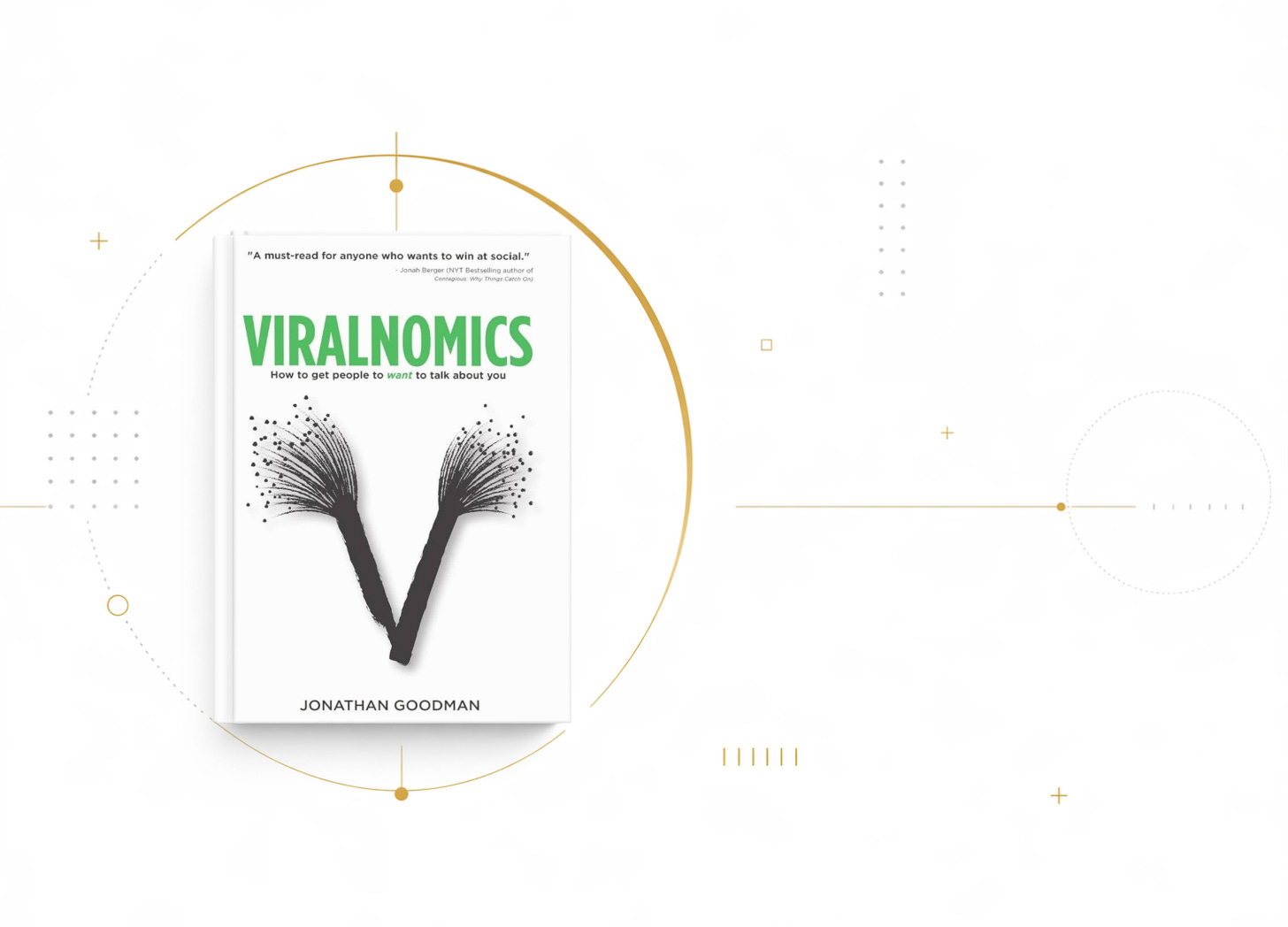
Jonathan Goodman opens Viralnomics with a sentence that fits on one line and summarizes everything you are about to read.
“Buttons change, humans don’t.”
That is the whole book. Everything that comes after is just the explanation.
The first story does not start in 2006. It does not start in 2010. It starts in 1884, with a British photographer named Harry Pointer who thought it was funny to dress cats in human clothes and photograph them with phrases written on top. Pointer collected more than 200 of those photos over his lifetime.
One hundred and thirty years later, someone registered the domain lolcats.com. People kept passing funny cat images along to each other, exactly as they always had.
The platform changed from postcards to the internet. The behavior did not change at all.
What makes something spread has everything to do with what human beings have always wanted: to feel like they belong to a group, that they are loved, that they are part of something bigger than themselves. Understanding this, according to Goodman, is the difference between spending your entire career chasing every new social network and actually building something that lasts.
In this article, you will find:
Why obsessing over the buttons is keeping you in second place
Meet the cast: the four people you will find on any social network
IIIAF: the oldest drug on the market, and how it controls everything that happens online
The selfish meme, and why a share only matters if people know where it came from
Filter bubbles: why the feed is worth more than any product you sell
Real power: two ideas the book teaches that most people ignore
The metal spoon, the Thai market, and why timing is everything
Emotion before logic: the formula the book proposes for any message
Content lost the throne. Packaging took over.
The three types of content every project needs to balance
Critics, trolls, and haters: how to handle each one
The Livia Vaduva who is probably already in your audience
You need to become “the guy”
Key Takeaways: What to Remember From This Book
Buttons change, humans don’t. Platforms come and go. What makes people act online is the same thing that made them act before the internet existed. Once you understand this, you stop chasing every new tool.
A share only matters if people know where it came from. The selfish meme can travel the world without anyone knowing who made it. You need people talking about you, knowing they are talking about you.
Know your cast. Carpenter Ants consume but do not act. Road Builders build the paths. Sea Lions use the work of the big players without trying to compete with them. Diamonds in the Rough move information without appearing in it. Each type requires a different approach.
IIIAF is the engine of everything. People share what makes them look intelligent, interesting, attractive, or funny, not what is useful to others. Before creating any content, ask: what is the person sharing this saying about themselves by doing so?
The feed is worth more than any product. Someone who finds you through search asks “why should I choose you?” Someone who finds you through a trusted recommendation asks “how do I start?” These are completely different conversations, and only the second one begins with trust already in place.
Real power has two parts. Knowing where to find the answers is worth more than knowing the answers. And maintaining a position where everyone owes you a favor, not the other way around, is the most valuable asset you can build.
Emotion before logic, always. Emotion drives action. Logic justifies action after the fact. Every message needs to follow this sequence: emotional benefit, concrete value, features and proof.
Original content is no longer the advantage. The battle for original content is over. Length, sources, and borrowed legitimacy build perceived quality, and perceived quality is what determines sharing.
Balance viral, value, and action. At the start, 80% of your content should generate emotional responses. As you grow, the mix changes, but all three types always need to exist.
Your Livia Vaduva already exists. The most valuable people for your growth are probably already in your audience. Stop, pay attention, and never automate personal interaction.
Become the guy. The goal is not virality. It is being the first name that comes to mind when someone in your circle needs what you offer. You cannot measure this. But it happens if you show up consistently over time.
Why Obsessing Over the Buttons Is Keeping You in Second Place
There is a distinction the book makes right at the beginning. It sounds obvious until you realize that almost nobody actually applies it.
There is a huge difference between knowing how to use a platform and understanding why people use it.
Most “social media experts” are completely focused on the buttons. A/B testing, the best time to post, page design, the type of image that gets the most clicks.
All of that has some value, sure. But it is completely secondary.
What actually matters is making people want to push those buttons.
Think about it this way. You are not competing with other brands or other professionals. You are competing for the attention of people who come home after a full day of work, turn their brain off, and open their feed to relax. At that moment, their guard is down. Emotion takes over. And that is exactly where you need to be.
Goodman is direct about this: every time someone opens their social media feed, the subconscious takes over. People are more open to persuasion there than anywhere else. And if you know how to spot when someone is in a moment of low emotional stability, searching for support, you know exactly when to deepen the relationship and offer value.
The book does not propose persuasion. It proposes facilitating a process that is already happening. People have already organized themselves into groups. They already have beliefs and desires. Give them something that reinforces who they already are, and they will share it.
The Selfish Meme: Why a Share Only Matters if People Know Where It Came From
Before we meet the cast, there is a foundational concept Goodman introduces early on that anchors everything else in the book.
In 1976, Richard Dawkins coined the term “meme” in The Selfish Gene, describing the transmission of genetic information and its influence on evolution. Over time, the word took on a new meaning: any idea that spreads across the internet, in the form of an image, video, hashtag, or text.
Goodman takes that idea and builds a new concept on top of it: the selfish meme. It is a meme that propagates selfishly, where every person who shares it is doing so for themselves, even if they do not realize it. The physiological response to sharing creates a cycle: when we do it, we want more, and the process feeds itself.
But there is an important warning the book makes right after: a share does not help your business if nobody knows who created the content. The funny cat image travels the world, but nobody knows who made it. For you, that is worth nothing. What you need is for people to talk about you, knowing they are talking about you.
Meet the Cast: The Four People You Will Find on Any Social Network
One of the most useful parts of Viralnomics is the taxonomy of characters you will encounter on any social network. Goodman divides people into four types, and understanding who is who changes everything about how you act.
The Carpenter Ants
The metaphor is precise. Carpenter ants live inside your house, tunnel through the wood, use everything you have, and never say thank you. Without you, they would have nowhere to live. But they never give you anything in return.
They are the majority of your readers and followers. They consume everything, never interact, never buy, never thank you. Goodman admits he was like this for two years: he would wake up early, read blogs, absorb content, and never give anything back. You need them to exist. But with only them, you will not get anywhere.
The important point here: even Carpenter Ants have indirect value. If they do not buy, they might know someone who will. Your success depends on how well you help the people around you.
The Road Builders
These are the people who actually matter. The book introduces Greg O’Hare, a guy whose Facebook profile name was Greg Ohnoez and whose profile picture was a Buddha. Goodman did not know his real name for a long time. But Greg was responsible for a significant part of how information spread through the online fitness community.
Greg used his page like a diary, to organize his thoughts. He did not care if anyone read it, which is largely why people did. When he liked something, he shared it. When people interacted with him, he interacted back. Show Greg O’Hare that he matters, and he will make sure his entire world knows who you are.
Greg did not want to be famous. He did not want to sell anything. He was a consumer who wanted to talk about what he loved. And that kind of person builds the paths through which information travels.
Do not waste energy trying to get the attention of big influencers. Find the Greg O’Hares in your area.
The Sea Lions
Goodman tells the story of a fishing trip in Alaska. The water was calm when, out of nowhere, birds started gathering in one spot. The boat’s sonar began picking up whale calls. Bubbles formed, and fifteen whales shot up from below. The calm scene turned into a frenzy, with whales capturing most of the krill.
What most people would not have noticed were the sea lions. They stayed on the edges of the chaos, catching the fish the whales left behind or flung too far away. They knew that following the whales meant dinner. They were not trying to compete with the whales. They were using the whales’ work to their advantage.
The practical application is elegant. When a big influencer posts something and dozens of people comment, those commenters are your real targets. That is exactly how Goodman found Greg O’Hare. Greg had commented on three straight posts from three different influencers on the same day. It was immediately obvious that he was the kind of person who participates actively and spreads information.
The Diamonds in the Rough
These are the people behind the people. The journalists who write about the influential figures in your industry. The ones who move information without necessarily appearing in it. The book’s advice is simple: become a detective. Who in the media has written about influential people in your field? Those are your targets.
Watch them. Learn more about them. Wait for the right moment to deepen the relationship. When they ask for help on a project, respond immediately. When they are promoting something, offer support without asking for anything in return. Once you are in, you are in. The hardest part is getting your first big break. After that, use it to get more.
IIIAF: The Oldest Drug on the Market
This is, probably, the most important idea in the entire book. Read this one slowly.
Goodman coins the acronym IIIAF to describe what he calls “the newest, oldest drug on the market.” It does not come as a pill. It is not injected. It is invisible. And everyone is addicted.
The acronym stands for the desire to be perceived as:
Intelligent
Intellectual
Interesting
Attractive
Funny
The mechanism is physiological. When we believe others perceive us this way, the brain releases dopamine. We want more. The behavior repeats. And here is the detail that changes everything: it does not matter whether we actually are those things. What matters is the perception.
“If I think that you think that I’m smart, I get a shot of dopamine and I feel good even if you actually think that I’m stupid.”
IIIAF is selective self-representation. It is why people share photos of their food. Why they take selfies. Why they pass along articles they barely read. Every online action is an attempt to say to the world: look at who I am, look at what I value, look at who I associate with.
The book points to an interesting data point: in 2010, only 15% of Facebook users updated their status daily. People want to be heard, but they need a voice to articulate their thoughts and desires for them. That is where you come in.
There is also the layer of asynchronous communication. When you talk to someone in person, the conversation is synchronous: you speak, they respond, with little time to weigh the consequences. Online, with texts, comments, and posts, you have all the time in the world to craft a message that makes you look exactly the way you want to look. That window of time is where IIIAF operates most powerfully.
And there is a deeper layer still. A 2011 study with 569 Facebook users found that the status updates people most regretted publishing were created in moments of emotional instability. The person was seeking perceived support, a hit of IIIAF, and acted impulsively. People who crave more social support also tend to have more negative health habits, like overeating, smoking, and drinking, as compensatory behaviors.
For you as a content creator, this means two practical things.
First: before any piece of content, the right question is not “is this useful?” It is “does this make the person sharing it look intelligent, interesting, or funny?”
Second: knowing how to spot when your audience is in one of these low-stability moments is a real advantage for anyone who wants to build genuine relationships.
Filter Bubbles: Why the Feed Is Worth More Than Any Product You Sell
The book references a reflection from media theorist Marshall McLuhan: “We become what we behold. We shape our tools, and therefore our tools shape us.”
The concept of filter bubbles was originally described by internet activist Eli Pariser in his book The Filter Bubble, published before he co-founded Upworthy, the fastest-growing website in internet history at the time. The idea is simple: algorithms track everything, from your age, gender, and location to your behaviors across the internet, and build a personalized feed just for you.
The result is two consequences Goodman highlights specifically.
First: confirmatory information becomes dominant, and dissuading information never gets seen. In Pariser’s own words, the bubble surrounds us with ideas we already agree with, making us overconfident in our mental frameworks, and removes the prompts that make us want to learn new things.
Second: people we interact with dominate our feeds. If you interact with someone, there is a good chance you will see more from them and less from everyone else.
This has a direct implication for your business.
“When a person that you trust links to a movie trailer, you watch it when you’d otherwise skip the commercial.”
When someone you trust tags a blog post as “something I found interesting,” you read it more carefully than if you had found the same article through an organic search. The feed is an extension of personal relationships, scaled almost infinitely.
And here is the central argument about the feed versus search. When someone finds you through a search engine, the first question they ask is “why should I choose you?” When someone finds you because a friend said “talk to this person, they are the go-to for this,” the question changes completely to “how do I start?” The trust has already been transferred. The sale is halfway done.
Search engines breed Carpenter Ants. The feed breeds buyers.
Goodman also makes a prediction in the book worth noting: referral traffic to websites will keep growing, making conventional SEO less valuable. Professional accounts do not dominate feeds, and large organizations will be forced to create representative personalities. Perception of quality matters more than actual quality when trying to get material to spread.
Real Power: Two Ideas the Book Teaches That Most People Ignore
The book dedicates a significant section to defining what real power actually is. The definition has two parts, and they work together.
Part 1: Real power does not come from knowing. It comes from knowing where to find.
The book tells the story of Henry Ford. In 1919, he was involved in a slander lawsuit after a Chicago newspaper called him an “ignorant anarchist.” The defense tried to prove he was ignorant, and it became clear during the trial that Ford did not know basic American history dates.
Was Ford stupid? Goodman argues no. Ford understood that what he knew did not matter much. What mattered was that he had the resources to find the answers when he needed them.
The practical application: when someone asks you about an area of your industry where you are not the expert, you should know someone who is, and pass the baton. Doing this both strengthens your position as the go-to source for information and gives the expert you referred to a boost of social equity.
Part 2: Real power is maintaining a position where everyone owes you one, not the other way around.
Do favors. Every day. The book is very concrete here: promote someone’s book when they launch. Share the news when someone announces a new company. Do five to ten favors a day, and a favor can be as small as congratulating someone on a post. These favors take little time, little effort, and almost no money. But the rewards are significant.
The book quotes Jayson Gaignard, founder of MastermindTalks: “deep down inside I knew in the worst case, that the bank could take my car, they could take whatever measly assets I had left, but they couldn’t take my network.”
The Metal Spoon, the Thai Market, and Why Timing Is Everything
Two stories from the book that stayed with me, each illustrating a different idea with real clarity.
The first is the metal spoon. Goodman and his girlfriend were hungry after a workout when two young women outside a restaurant offered free samples of tiramisu in small paper cups. He grabbed a cup, but the dessert needed a spoon. “Want a spoon?” the second woman asked. He picked up a metal spoon, said the customary “thank you,” and started to walk away.
Then he stopped immediately. They got him. He was trapped.
Social convention says you need to return the metal spoon. He was forced to stay. Standing there, he asked about the restaurant and learned it was a vegan, gluten-free Italian restaurant that had just opened. Vegan, gluten-free Italian food, in his words, is NOT a thing. But they were already committed and hungry. Thirty-four dollars later, they waved goodbye.
The point the book makes here: it is not about how many buttons you push or how many messages you send. What matters is pushing exactly the right button at exactly the right moment. What does your reader or prospect want right now? What word or phrase will stop them in their tracks?
The second story is the market in Pai, Thailand. A small town where a large market opens every night. Every stall was selling the same cheap jewelry. But one stall always had a crowd buying, while the others sat empty. After investigating, Goodman discovered the stall was selling the exact same pieces at a higher price.
The difference? The stall had a gold embroidered wall around it. The owners had invested a few dollars to create the illusion of higher quality, what Goodman calls “trappings.” This reminded him of a quote from Nobel Prize winner Daniel Kahneman: “people consider a particular value for an unknown quality before estimating that quality.”
The lesson: how you package your product determines how much people think it is worth before they even try it.
Emotion Before Logic: The Formula the Book Proposes for Any Message
The book cites a line from Jonah Lehrer in How We Decide: “emotional sharing creates a bond between narrator and audience.”
Emotion drives action. Logic justifies action after it has already been taken. This means you need to lead with emotion, every single time.
The feed moves fast. Attention is short. You have to grab people immediately or lose the chance. The entire point of your first paragraph is simply to earn the right to a second one.
Goodman proposes that every piece of marketing material, from a simple status update to a follow-up email series, should follow this sequence:
Emotion and benefits (why this matters to you right now)
Value and steps to solve (what to actually do)
Logic and features (the elements that justify the decision)
To identify the emotional triggers of your product or service, the book lists ten benefit categories that any product can activate:
Financial stability
Health
Love
Security
Salvation
Self-regard
Community and peer recognition
Independence
Sexual fulfillment
Beauty, desirability, and personal attractiveness
Touch at least one of these in every ask you make.
After benefits comes value: concrete information that helps your prospect solve the problem. There is an odd phenomenon the book describes: solve someone’s problem for free, and they will pay you to solve their problem.
After that come the features: the logic and trust elements that justify the purchase. The book lists eight categories, including proof, statistics, testimonials, quotes from authority figures, tests, social proof, seals of approval, and awards won.
The Status Update Formula
The book goes further and proposes a specific formula for any post or update:
Headline (short, hits the biggest emotional benefit)
Lede (one or two sentences that pull the reader in)
Steps to solving (concrete, immediately actionable information)
Call to action (the ask, ideally using the word “because”)
On that last point, Goodman highlights that “because” is one of the most powerful words you can use. Adding a “because” statement helps people justify an action to themselves. Instead of “subscribe to my newsletter by clicking here,” say “subscribe to my newsletter by clicking here because if you don’t do anything different today, how will tomorrow be any different?”
There is also an important concept the book explains called cognitive ease. Nobel Prize winner Daniel Kahneman showed that we tend to believe and trust information that is easier to process. If a statement is easier to read, it feels more true. Using bold text, capitals, and symbols to highlight certain parts of your text reduces cognitive strain and increases perceived credibility. Conversely, unnecessary jargon and needlessly complex wording makes you seem less trustworthy, not more.
Content Lost the Throne. Packaging Took Over.
The book presents a timeline that is equal parts nostalgic and brutal.
There was a time when information was so scarce that the edges of an encyclopedia were gilded in gold. Families bought the collection in installments because they could not afford to pay upfront. Children would spend an hour reading about piranhas by accident, just because they were flipping through the P volume. The joy was not in finding the answer. It was in the search.
Then came the CD-Rom, then the internet, then Wikipedia, then the blogs. In 2003, Google CEO Eric Schmidt said that every two days, humanity creates as much information as it created from the dawn of civilization until 2003. Since then, that process has compounded. Information stopped being scarce and became infinite. What was precious turned into noise.
And here comes the argument Goodman does not soften: unless you are a leading researcher, you probably have nothing deeply original to say. Everything you know, a thousand other people also know, and many of them have already published it for free. The battle for original content is over. Packaging won.
The book presents three main ways to create a perception of quality:
Length. Posts between 1,800 and 3,500 words get shared more. Most people will not read all of it, and Goodman knows this. But length signals that the author took the subject seriously, and that signal counts. That said, the book is clear: do not be verbose just to be verbose. As short as possible, as long as necessary.
Sources. Supporting your claims with references builds trust. If the reader does not know you yet, they need a reason to trust at least one of your sources before they trust you.
Borrowed legitimacy. Quoting other experts works. Giving names to your methodologies works. Goodman created a referral system for personal trainers and called it the “referral ensure system.” The moment something has a name, it feels like a real thing, and people treat it that way.
The Three Types of Content Every Project Needs to Balance
The book divides content into three distinct categories. Understanding the role of each one completely changes how you plan what you produce.
Viral is anything that generates an emotional response. Professor Jonah Berger of the Wharton School, author of Contagious: Why Things Catch On, showed that activating emotion and physiological arousal leads to a significant bump in virality. Happiness works. Anger works too. What does not work is neutral. Pure information. Facts without emotion. Viral content is also driven by IIIAF: if you make someone feel good and give them a tool to project to their audience that they appear intelligent, interesting, or funny, the chances of spreading increase significantly.
Value-Add is the content that serves your existing followers but will not spread outside your current network. It does not increase your numbers, but it adds real value to your existing audience and positions you as the go-to reference for people who already know you.
Call to Action is where you ask for something specific. An email list opt-in, a low-priced product, a page like. The book is clear: you always need to ask, because people simply do not know what to do without an obvious next step.
The ratio between these three changes as you grow. At the start, with no audience, the book suggests something close to 80% viral, 10% value, 10% action. Goodman describes his own case with the PTDC: once he had a large established audience, the ratio shifted to 10% viral, 70% value, 20% action, because the work changed from attracting new readers to converting the ones already there.
Critics, Trolls, and Haters: How to Handle Each One
As you grow, three types of negative characters will appear. Goodman describes each one with clinical clarity.
The Critic is usually well-spoken. They respect what you say but offer a different opinion. They do not fall into the emotional trap and seem to genuinely want to help. The critic helps you grow. Listen to what they say and decide whether it is warranted. Sometimes you were actually wrong. That happens, and there is nothing wrong with it.
The Troll just wants to agitate others. You can usually spot them because they make up their own words and share a stream of picture memes. The best thing to do is simply ban them from all your networks. Do not respond. That is exactly what they want.
The Hater cannot find a way to stop hating, no matter what you do. They hold a grudge and take everything you say as a personal attack. The main difference from a troll is that the hater does not seem to make any effort to be funny. Use the hater to strengthen the conviction of your existing followers. They will get emotional and discredit themselves quickly.
On responding to comments in general, the book has one important principle: never engage in debates on platforms where the majority of onlookers hold a different opinion. Always try to take the conversation to a platform you control or that is neutral.
When you respond, comment not to convince your opponent. Comment for the onlookers. To bring those on the fence over to your side, strengthen the connection with those already with you, and push further away those who are against you. Post once, well-articulated, and leave. Never get into a back-and-forth, because if you do, you lose power.
The Livia Vaduva Who Is Probably Already in Your Audience
One of the most concrete moments in the book is the story of Livia Vaduva.
Goodman had his site audited and was surprised to discover that Romania was the third largest source of traffic. Not the United States. Not Canada. Not Australia.
Romania.
The reason was one single person. Livia Vaduva, whom he had noticed liking posts consistently for weeks, had been publishing every single article from the site into the largest Romanian workout group on the internet. She never asked for anything. She never announced herself. She just did it because she cared about the content.
One day she sent Goodman a long email. He was swamped with emails and almost did not read it. He is glad he did. He was so moved by her story that he stayed up until 2 a.m. writing the response. They have had a great relationship since.
The most important people for your growth are probably already in your audience. You just have not stopped to identify them.
The book’s instruction is direct: pay attention to who comments and likes consistently. Build a real relationship with those people. And when someone sends you a long email, read the whole thing and respond with everything you have.
“Stay awake for three days straight if you need to. Answer them all with the best damn answers you can muster up. This is what you’ve been working for.”
You can outsource house cleaning. You can hire a chef. But never automate personal interaction. Your response might just get you posted on the largest workout forum in Romania.
You Need to Become the Guy
The book ends with a concept that runs through every single page from the beginning: you need to become “the guy.” The go-to. The expert who comes to mind automatically when someone in your circle needs what you offer.
The guy does not necessarily know more than everyone else. What they know how to do is be in the right place at the right time, articulate the spoken and unspoken desires of others with clarity and consistency, and become the voice of the network.
Goodman tells the story of a girl he went on one date with in high school and never spoke to again after university. She had never liked, commented on, or interacted with any of his posts on Facebook. One day she tagged him in an exercise video. He was “the fitness guy” to her, without any direct interaction. And someday she might know someone who knows someone who wants to hire a personal trainer, and his would be the first name she would mention.
“You can’t measure this. This is scalable. This is an example of what will happen when you put yourself in the best possible position to catch a lucky break.”
Your chances of success start and end with how lucky you get. And everything you can do is increase your chances of catching a good break when it comes.
That is the real promise of the book. Not instant virality. Not exponential growth in 30 days. A consistent presence, built on real human psychology, that keeps placing you in the best possible position for the right things to happen.
Buttons change. Humans don’t.
And the only sustainable advantage you can build is not mastering today’s algorithm. It is understanding what makes people act the way they have always acted, long before Harry Pointer photographed cats in 1884.
The difference between a professional who is “busy” and one who is “influential” often comes down to the quality of the assets they build.
Don’t leave your reputation to chance or the whims of an algorithm.
Take the next step in your professional evolution:
Review the Sources: See the logic behind the strategy at Sources & Giants.
Use the Resources: Download the guides on the Resources Page.
Upgrade to VIP: Get the complete execution framework via VIP Access.
Super cool summary of the book, makes me want to read it. Thank you for the details and the depth of it.
What shocked me was the length of the articles recommended, I am guessing this recommendation isn’t necessarily for Substack specifically but I felt the article I wrote were already way too long (1300 words). 😳