

If you find value in these reflections, you are likely missing out on the deeper, more specialized layers connected with this ecosystem built to improve you:
The Foundation: Understand the frameworks and mentors that inform this methodology at On the Shoulders of Giants.
The Toolkit: Access the Free Resources to start auditing your current digital footprint.
The Accelerator: For those ready to bypass the trial-and-error phase, the VIP Premium Packs provide the exact systems used to scale professional influence.
Ah… And if your focus is not only on your visibility, but also learn the internal systems of your career and personal growth, you should check Meller Notes.
You explain an idea with all the care in the world. You give context, examples, lay out the benefits.
And the person on the other side just doesn’t buy it. Doesn’t move.
They’re sitting there with that “yeah, sure, got it” look on their face that clearly means they didn’t get it, or worse, they got it and didn’t care.
And so you think: “this person is difficult.” Or “they just don’t want to change.” Or “I’d need a miracle to convince them.”
But what if the problem wasn’t the person... and it was the language you used with them?
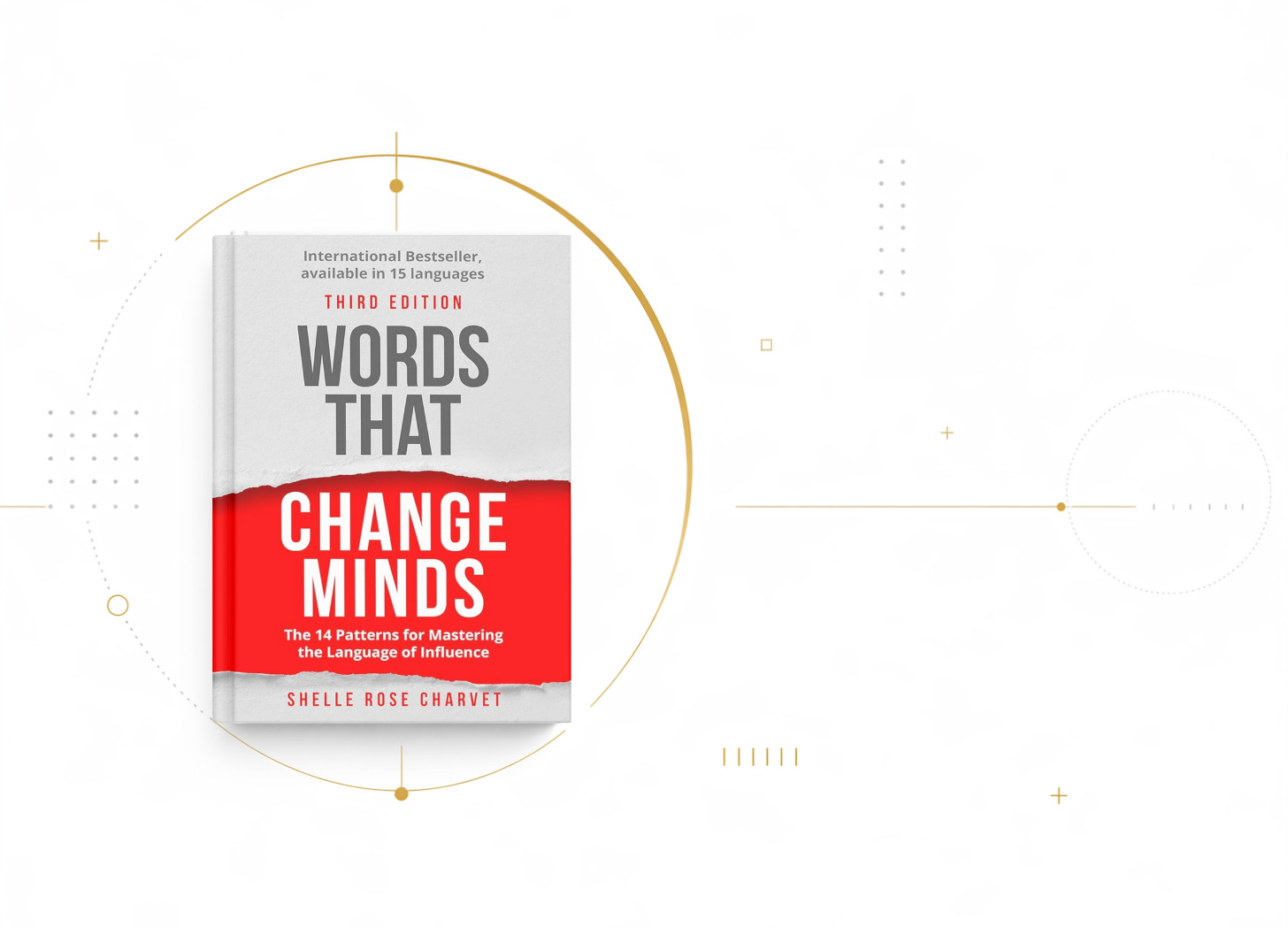
That’s the central argument of Words That Change Minds, by Shelle Rose Charvet, and honestly, it’s one of the most practical and under-read books on communication I’ve ever come across.
Shelle spent decades developing and applying the LAB Profile (Language and Behavior Profile), a tool that lets you understand how someone thinks, decides, and gets motivated... simply by paying attention to how they speak.
Not what they say. How they say it.
“To take someone somewhere with you, you need to meet them where they are. Go to their bus stop, and from there, invite them to come along.”
That’s the central principle. And once you truly get it, you’ll never try to convince someone the old way again.
Here is the table of contents for the post:
Why Most of Our Attempts to Influence People Fail
The 14 Patterns: A Map of the Human Mind
6 Patterns of Motivation (Why people do things)
Level (Motivation Direction)
Proactive (acts now)
Reactive (waits, analyzes).
Criteria (Motivation Target)
The hot buttons or values that matter to them.
Direction (The Carrot or the Stick?)
Toward (focuses on goals/attaining)
Away From (focuses on problems/avoiding).
Source (Where The Motivation Comes From)
Internal (Knows within self)
External (told by others, facts and figures)
Reason (Motivation Source)
Options (criteria, choice, possibilities, variety)
Procedures (story, how, necessity, didn’t choose)
Decision Factors (Change or Stability?)
Sameness (same, no change)
Sameness with Exception (more/better, comparisons)
Difference (change, new unique)
Sameness with exception and difference (new and comparisons)
8 Patterns of Productivity (How they work/process information)
Scope (Attention Span)
Specific: details, sequences, exactly
General: overview, big picture, random order
Attention Direction (Focus)
Self: short monotone responses
Others: animated, expressive, automatic responses
Stress Response (Emotional Reaction)
Feeling: goes in and stays in feelings
Choice: goes in and out of feelings
Thinking: doesn’t go into feelings
Style (Working Method)
Independent: alone, I, sole responsibility
Proximity: in control, others around
Cooperative: we, team, share responsibility
Organization (System)
People: people, feelings, reactions
Things: tools, tasks, ideas
Rule Structure (The Guidelines)
My/My: my rules for / my rules for you)
My/.(period): my rules for me / who cares?
No/My: No rules for me / my rules for you
My/Your: my rules for me / your rules for you
Convincer Channel: What Kind of Proof?
See: They need to visually “see” a product, service, or idea
Hear: They need an oral presentation or to hear something
Read: They need to read something
Do: They have to do something.
Convincer Mode: How Many Times Does It Need to Happen?
Number of Examples (give number)
Automatic (benefit of the doubt)
Consistent (not completely convinced)
Period of Time (give time period)
Patterns in Combination: Where It Gets Really Powerful
How to Apply This: The Main Techniques
What to Carry Forward
Why Most of Our Attempts to Influence People Fail
Here’s what happens in practice: when we want to convince someone of something, we naturally use the arguments that would convince us.
If you’re driven by goals and achievements, you talk about opportunities and gains. If you’re motivated by avoiding problems, you talk about risks. If you need concrete examples to decide, you dump data. If you need the big picture first, you start with the vision.
The problem is that the other person may have a completely different pattern. And when you speak your language instead of theirs, the message simply... doesn’t land.
Shelle calls these filters. Every person deletes, distorts, and generalizes reality in specific ways. And those filters show up in language.
It’s about how someone is operating in that specific context. The same person can be completely different at work, at home, in a negotiation, or when learning something new.
And that’s where it gets interesting.
The 14 Patterns: A Map of the Human Mind
The LAB Profile identifies 14 language and behavior patterns, divided into two groups.
The first six are motivation patterns: what switches a person on, what makes them act or freeze. The other eight are productivity patterns: how they process information, work, and reach conclusions.
Let’s go through what matters, with real depth on each one…
